Tens
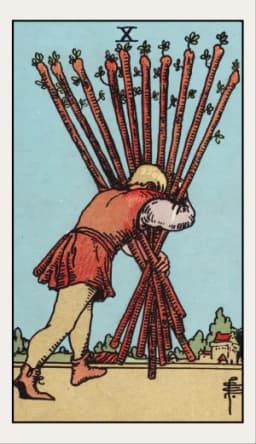
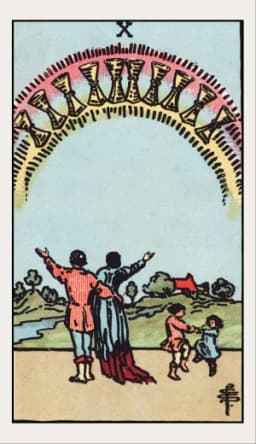
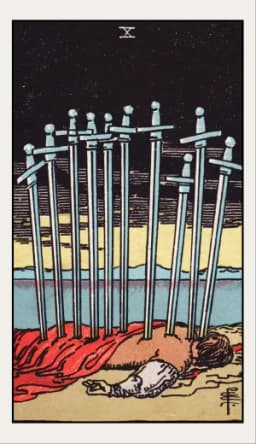
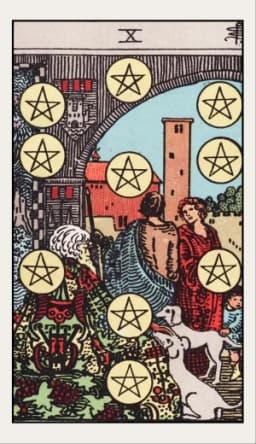
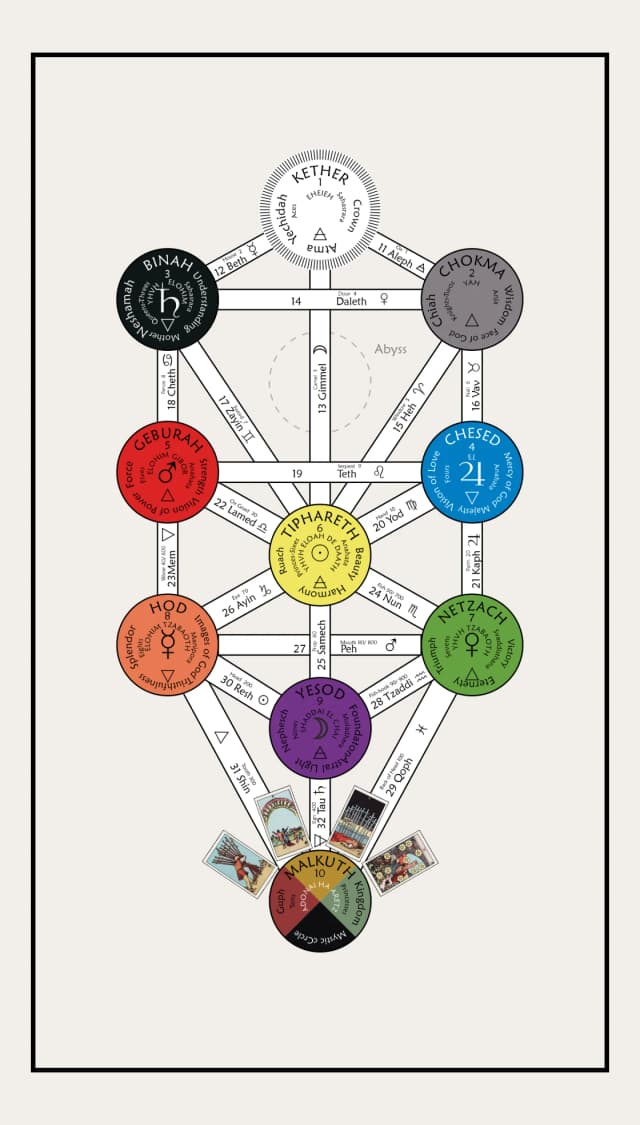
The Tens of each suit correspond to Malkuth, Kingdom—the tenth and final Sephira, the realm of physical manifestation where spirit has fully descended into matter. Malkuth is called 'the Bride' and 'the Queen,' the earthly vessel that receives and grounds all the energies descending through the Tree. This is the completion of the journey from Keter to matter, the full expression of elemental force in tangible form. The Tens represent endings, culminations, and the often complex experience of achieved manifestation—including both its rewards and its burdens. In the Western Mystery Tradition, Malkuth is understood not as the lowest but as the most complete, containing within it seeds of all the Sephiroth above.
Qabbalistic Significance: Malkuth is associated with Earth and with the fallen Shekinah—the divine presence dwelling in the material world, awaiting recognition and reunion with its source. It is both the end and the beginning, for in Malkuth the cycle completes and prepares to begin anew. The Tens carry this energy of full manifestation and cyclical completion: the Ten of Wands shows the burden of responsibility, the weight of carrying one's creative work to its conclusion; the Ten of Cups reveals the fullness of emotional fulfillment, the rainbow promise of family and lasting happiness; the Ten of Swords presents the complete ending, the dramatic conclusion of mental struggle that clears the way for new beginning; the Ten of Pentacles embodies generational wealth, the legacy that extends beyond individual life into family and community. The esoteric number ten is the number of completion and return to unity at a new level—one and zero, beginning within ending.
 Click the image to enlarge
Esoteric Meaning & Practical Application: In readings, Tens indicate the completion of a cycle, the manifestation of long-developing patterns, and the threshold between ending and beginning. They carry both the satisfaction of completion and the weight of full responsibility. The Ten of Wands addresses the burden of success, the responsibilities that come with carrying creative projects to fruition; the Ten of Cups celebrates achieved emotional fulfillment, the rare and precious experience of lasting contentment; the Ten of Swords signals necessary endings, the dramatic conclusions that create space for renewal; the Ten of Pentacles speaks to legacy, inheritance, and the structures that extend beyond individual existence. The spiritual lesson of the Tens is learning that manifestation is not the end but a new beginning—that the completed cycle immediately initiates the next, and that the material world is not the prison of spirit but its flowering.
Shadow Aspects & Imbalances: The shadow of the Tens emerges when manifestation becomes fixation, when the completion of the cycle is mistaken for a permanent state rather than a momentary crystallization. An imbalanced Ten of Wands may manifest as martyrdom, overwhelming burden, inability to delegate, or collapse under the weight of overcommitment; the Ten of Cups as the desperate pursuit of an ideal that denies life's complexity, or the hollow performance of happiness; the Ten of Swords as victimhood, drama, self-destruction, or the refusal to release what must end; the Ten of Pentacles as materialism, family dysfunction hidden beneath prosperity, or the burden of inherited patterns. The deeper shadow of all Tens is attachment to form—the belief that the manifest expression is the final truth rather than a temporary crystallization of eternal processes. Healing comes through recognizing Malkuth as the sacred vessel it truly is, and understanding that every ending is pregnant with new beginning.
Written by
Serena Nightwell
Tarot Reader, Astrologer & Esoteric Researcher
With over a decade of dedicated study in tarot, astrology, and the Western esoteric tradition, Serena Nightwell brings scholarly depth and intuitive wisdom to every reading and article. Her work bridges ancient mystical knowledge with modern psychological insight, making the timeless wisdom of the cards accessible to seekers at every level of their journey.
References & Further Reading
The Pictorial Key to the Tarot — Arthur Edward Waite (1911)
Seventy-Eight Degrees of Wisdom — Rachel Pollack (1980)
The Book of Thoth — Aleister Crowley (1944)
Tarot: Mirror of the Soul — Gerd Ziegler (1988)
The Qabalistic Tarot — Robert Wang (1983)
Understanding Aleister Crowley's Thoth Tarot — Lon Milo DuQuette (2003)
Content informed by these scholarly and traditional sources. Interpretations reflect a synthesis of historical research and contemporary practice.
Discover Your Birth Chart
Unlock the map of the stars at the moment of your birth. Understanding your Sun, Moon, Rising and planetary positions.
Only €1.99or included free with Premium
Latest Insights