Sixes
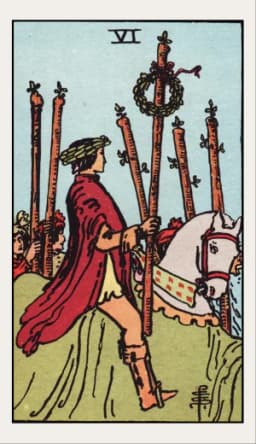
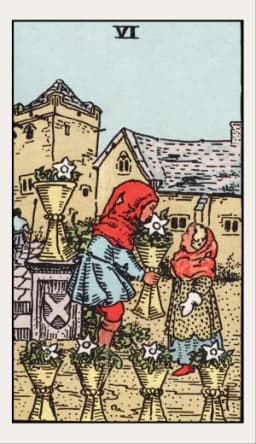
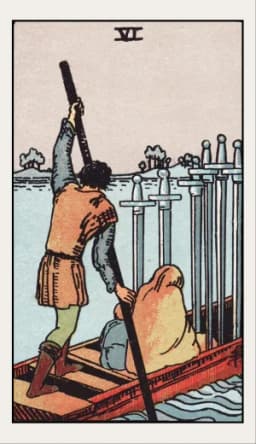
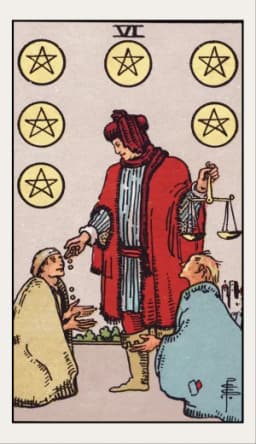
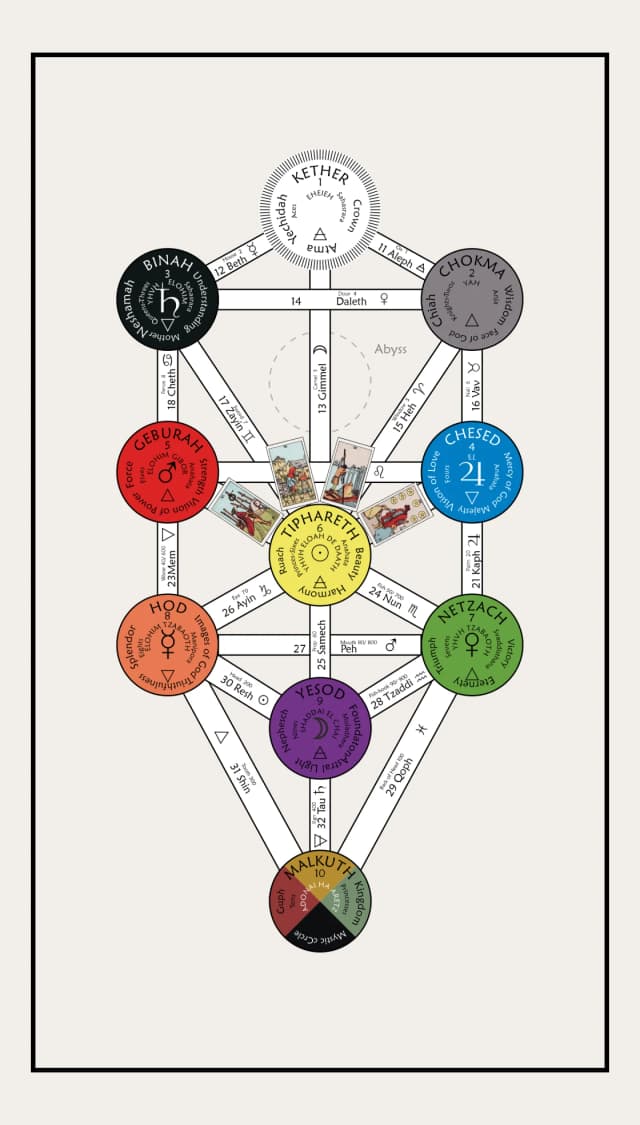
The Sixes of each suit correspond to Tiphareth, Beauty—the sixth Sephira and the radiant center of the Tree of Life. Tiphareth stands at the heart of the Tree, receiving and harmonizing the forces from all other Sephiroth, creating balance from opposing energies. This is the sphere of the solar consciousness, the Christ center, the awakened heart that integrates spirit and matter. The Sixes represent harmony restored after conflict, the golden mean discovered after extremes, and the healing that comes when consciousness finds its center. In the Western Mystery Tradition, Tiphareth is the goal of the aspirant—the achievement of conscious union with the Higher Self.
Qabbalistic Significance: Tiphareth is associated with the Sun, the source of light and life that illuminates all it touches. It is the mediating consciousness, the sphere of sacrifice and resurrection where the personal ego surrenders to something greater. The Sixes carry this energy of balanced integration and earned harmony: the Six of Wands shows victory achieved through right action, recognition earned through genuine accomplishment; the Six of Cups reveals the healing power of innocence, nostalgia as a bridge to emotional wholeness; the Six of Swords represents the journey toward peace, the mental transition from troubled waters to calmer shores; the Six of Pentacles embodies the balanced exchange of resources, generosity given and received in proper measure. The esoteric number six represents harmony, the hexagram, and the integration of above and below.
 Click the image to enlarge
Esoteric Meaning & Practical Application: In readings, Sixes indicate balance restored, healing in progress, and the resolution of previous conflicts. They offer hope after struggle and suggest that the querent has found or is finding their center. The Six of Wands celebrates victory and public recognition, encouraging the querent to accept acknowledgment gracefully; the Six of Cups invites connection with the innocent wisdom of the past, healing through memory and reunion; the Six of Swords guides transition and recovery, the necessary journey from difficulty toward peace; the Six of Pentacles addresses the sacred economy of giving and receiving, asking about balance in material and spiritual exchanges. The spiritual lesson of the Sixes is learning that true harmony is not the absence of tension but the dynamic balance of opposing forces—the living equilibrium that characterizes all healthy systems.
Shadow Aspects & Imbalances: The shadow of the Sixes emerges when the quest for harmony becomes avoidance of necessary conflict, when the integrating function of Tiphareth becomes spiritual bypassing or false peace. An imbalanced Six of Wands may manifest as arrogance, hollow victory, or the need for external validation to feel worthwhile; the Six of Cups as escapist nostalgia, living in the past, or the inability to mature beyond childhood patterns; the Six of Swords as perpetual flight, never arriving at peace, or leaving situations prematurely; the Six of Pentacles as imbalanced charity, conditional generosity, or dependency masked as giving. The deeper shadow of all Sixes is the attachment to harmony that prevents necessary confrontation—the peace-at-any-price that ultimately perpetuates deeper conflict. Healing comes through recognizing that authentic harmony includes the capacity for righteous conflict and that the sun casts shadows as well as light.
Written by
Serena Nightwell
Tarot Reader, Astrologer & Esoteric Researcher
With over a decade of dedicated study in tarot, astrology, and the Western esoteric tradition, Serena Nightwell brings scholarly depth and intuitive wisdom to every reading and article. Her work bridges ancient mystical knowledge with modern psychological insight, making the timeless wisdom of the cards accessible to seekers at every level of their journey.
References & Further Reading
The Pictorial Key to the Tarot — Arthur Edward Waite (1911)
Seventy-Eight Degrees of Wisdom — Rachel Pollack (1980)
The Book of Thoth — Aleister Crowley (1944)
Tarot: Mirror of the Soul — Gerd Ziegler (1988)
The Qabalistic Tarot — Robert Wang (1983)
Understanding Aleister Crowley's Thoth Tarot — Lon Milo DuQuette (2003)
Content informed by these scholarly and traditional sources. Interpretations reflect a synthesis of historical research and contemporary practice.
Discover Your Birth Chart
Unlock the map of the stars at the moment of your birth. Understanding your Sun, Moon, Rising and planetary positions.
Only €1.99or included free with Premium
Latest Insights