Sevens
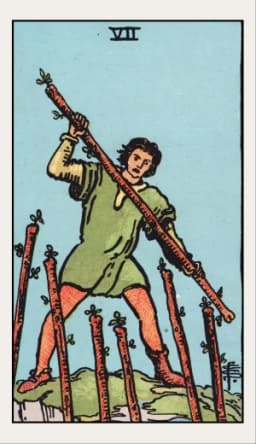
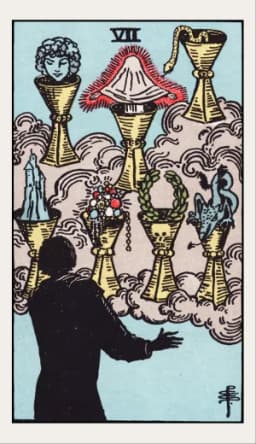
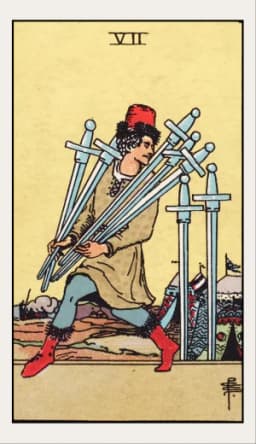
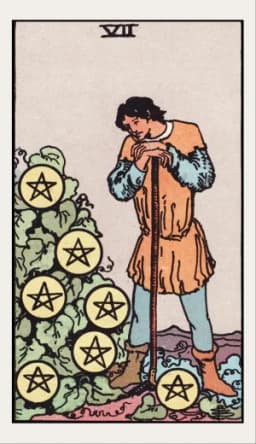
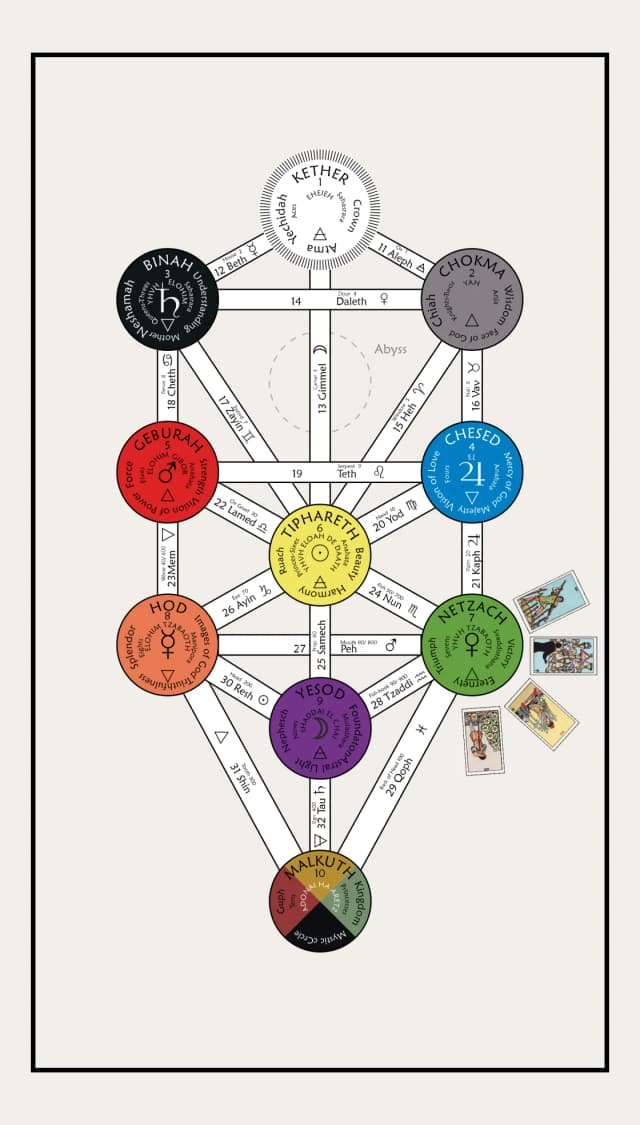
The Sevens of each suit correspond to Netzach, Victory—the seventh Sephira and the seat of emotion, desire, and the passionate forces that drive creation forward. Netzach represents the instinctual, feeling nature of consciousness, the realm of Venus where beauty, love, and desire motivate action. Unlike the intellectual precision of Hod across the Tree, Netzach operates through attraction, emotion, and the creative imagination. The Sevens represent the challenges that arise when passion encounters obstacles—the tests of desire that determine whether wanting something is enough to earn it. In the Western Mystery Tradition, Netzach is understood as the sphere of the artist, the lover, and the visionary who persists through beauty.
Qabbalistic Significance: Netzach is associated with Venus, the planet of love, beauty, and creative desire. It is the driving force that sustains effort through difficulty, the emotional fuel that powers perseverance. The Sevens carry this energy of passionate challenge and the testing of desire: the Seven of Wands shows defensive courage, maintaining one's position against multiple challengers through sheer determination; the Seven of Cups reveals the enchantment and danger of imagination, the multiplicity of desires that can seduce or inspire; the Seven of Swords presents the cunning and strategy born from emotional intelligence, sometimes crossing into deception; the Seven of Pentacles embodies the patient cultivation of material goals, the long assessment of whether invested effort will bear fruit. The esoteric number seven represents the classical planets, the days of creation, and the completion of a cycle before new beginning.
 Click the image to enlarge
Esoteric Meaning & Practical Application: In readings, Sevens indicate challenges related to desire, tests of commitment, and the perseverance required when enthusiasm alone is no longer enough. They ask whether the querent truly wants what they claim to want. The Seven of Wands calls for courage and the defense of one's position against opposition; the Seven of Cups invites discernment among many possibilities, the discipline to choose wisely amid temptation; the Seven of Swords demands strategic thinking and honest examination of methods, questioning whether cleverness serves higher aims; the Seven of Pentacles encourages patience and evaluation, the long view that sustains effort through periods of apparent stagnation. The spiritual lesson of the Sevens is learning that desire must be refined by difficulty—that authentic victory comes only to those whose wanting is deep enough to persist through challenge.
Shadow Aspects & Imbalances: The shadow of the Sevens emerges when desire becomes obsession, when the passionate force of Netzach overwhelms reason and ethical consideration. An imbalanced Seven of Wands may manifest as paranoid defensiveness, exhaustion from constant battle, or aggression disguised as protection; the Seven of Cups as fantasy addiction, paralysis through over-choice, or delusional escape from reality; the Seven of Swords as dishonesty, betrayal, or the conviction that cleverness justifies any means; the Seven of Pentacles as impatient abandonment of long-term projects, discouragement, or the inability to trust the process of growth. The deeper shadow of all Sevens is confusing intensity of desire with depth of commitment—burning hot and fast rather than steady and sustaining. Healing comes through recognizing that authentic victory requires not just wanting but earning, and that the patience of love outlasts the urgency of lust.
Written by
Serena Nightwell
Tarot Reader, Astrologer & Esoteric Researcher
With over a decade of dedicated study in tarot, astrology, and the Western esoteric tradition, Serena Nightwell brings scholarly depth and intuitive wisdom to every reading and article. Her work bridges ancient mystical knowledge with modern psychological insight, making the timeless wisdom of the cards accessible to seekers at every level of their journey.
References & Further Reading
The Pictorial Key to the Tarot — Arthur Edward Waite (1911)
Seventy-Eight Degrees of Wisdom — Rachel Pollack (1980)
The Book of Thoth — Aleister Crowley (1944)
Tarot: Mirror of the Soul — Gerd Ziegler (1988)
The Qabalistic Tarot — Robert Wang (1983)
Understanding Aleister Crowley's Thoth Tarot — Lon Milo DuQuette (2003)
Content informed by these scholarly and traditional sources. Interpretations reflect a synthesis of historical research and contemporary practice.
Discover Your Birth Chart
Unlock the map of the stars at the moment of your birth. Understanding your Sun, Moon, Rising and planetary positions.
Only €1.99or included free with Premium
Latest Insights