Knights
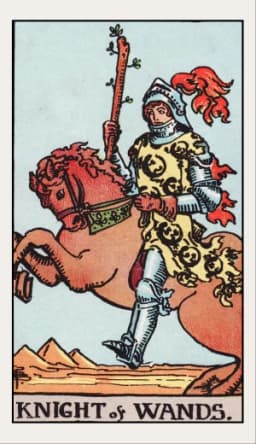
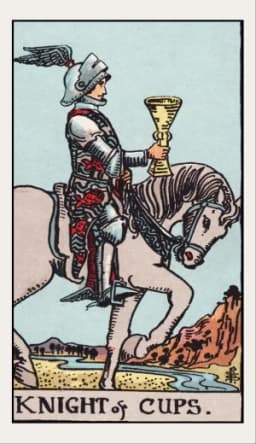
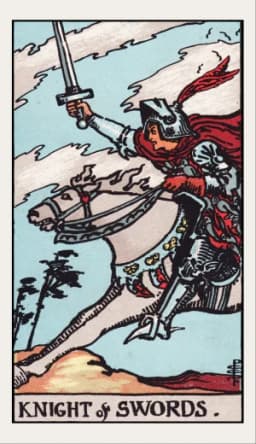
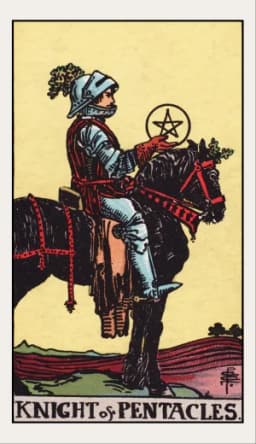
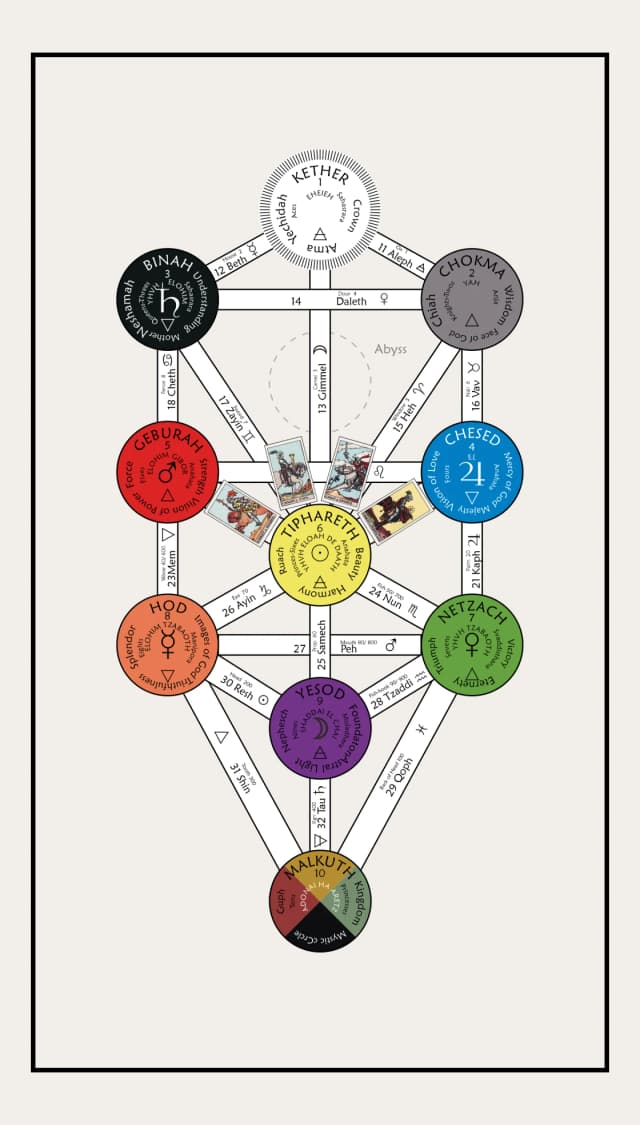
The Knights of each suit correspond to Tiphareth, Beauty—the solar center of the Tree where spiritual and material forces achieve dynamic integration. In the Golden Dawn system, the figures traditionally called Knights are designated as Kings (bearing the title 'Prince' as well in some traditions), representing the Vau of the Tetragrammaton—the Son who mediates between Father and Mother. Knights embody their element in active, directed motion: they are the crusaders, the questers, the adventurers who carry elemental force forward with purpose and passion. Unlike the stable authority of Queens or the grounded learning of Pages, Knights are defined by movement, pursuit, and the integration of spiritual ideals with practical action.
Qabbalistic Significance: As Tiphareth expressions, Knights carry the solar consciousness that harmonizes opposing forces and directs them toward a goal. They represent the Vau—the Son who extends the Father's will through the Mother's form, the active principle that moves between worlds. The Knights embody elemental air of their respective suits, giving each element mobility and direction: the Knight of Wands shows fire in air, passionate vision driving toward adventure and creative conquest; the Knight of Cups reveals water in air, the romantic idealist pursuing emotional or spiritual quests; the Knight of Swords presents air in air, pure intellect in swift motion, the militant champion of ideas who charges into battle without hesitation. The Knight of Pentacles demonstrates earth in air, methodical progress toward material goals with patient persistence. Each Knight is energy in motion, purpose embodied in action.
 Click the image to enlarge
Esoteric Meaning & Practical Application: In readings, Knights indicate movement, travel, the pursuit of goals, or dynamic individuals entering the querent's life. They suggest that action—not just planning—is required. The Knight of Wands brings energy for adventure, creative projects, and the courage to pursue passionate visions; the Knight of Cups carries the quest for emotional or spiritual fulfillment, romantic pursuit, or artistic inspiration; the Knight of Swords signals swift intellectual action, debates, decisive moves, or the cutting through of confusion; the Knight of Pentacles represents steady progress toward practical goals, reliable effort, and the methodical pursuit of material security. The spiritual lesson of the Knights is the integration of vision and action—understanding that ideas must be carried forward through committed pursuit, and that the journey itself is transformative.
Shadow Aspects & Imbalances: The shadow of the Knights emerges when movement becomes restlessness, when the questing energy loses its goal and becomes escape or compulsion. An imbalanced Knight of Wands may manifest as recklessness, aggression, instability, or the inability to commit to any path long enough to reach its end; the Knight of Cups as moodiness, unreliability, seduction without substance, or the perpetual romantic who loves the chase but not the relationship; the Knight of Swords as cruelty, fanaticism, intellectual tyranny, or the violence of ideas imposed without compassion; the Knight of Pentacles as stubbornness, plodding inefficiency, materialism without purpose, or the pursuit of security that misses the meaning of wealth. The deeper shadow of all Knights is the confusion of motion with progress—believing that movement itself is accomplishment rather than understanding that direction matters. Healing comes through aligning action with authentic purpose and learning that the true quest is always, ultimately, the return to the heart.
Written by
Serena Nightwell
Tarot Reader, Astrologer & Esoteric Researcher
With over a decade of dedicated study in tarot, astrology, and the Western esoteric tradition, Serena Nightwell brings scholarly depth and intuitive wisdom to every reading and article. Her work bridges ancient mystical knowledge with modern psychological insight, making the timeless wisdom of the cards accessible to seekers at every level of their journey.
References & Further Reading
The Pictorial Key to the Tarot — Arthur Edward Waite (1911)
Seventy-Eight Degrees of Wisdom — Rachel Pollack (1980)
The Book of Thoth — Aleister Crowley (1944)
Tarot: Mirror of the Soul — Gerd Ziegler (1988)
The Qabalistic Tarot — Robert Wang (1983)
Understanding Aleister Crowley's Thoth Tarot — Lon Milo DuQuette (2003)
Content informed by these scholarly and traditional sources. Interpretations reflect a synthesis of historical research and contemporary practice.
Discover Your Birth Chart
Unlock the map of the stars at the moment of your birth. Understanding your Sun, Moon, Rising and planetary positions.
Only €1.99or included free with Premium
Latest Insights